
News & Insights · Residential · Insight
Battery-Only Upgrades: What Homeowners With Solar Should Know in 2026
 By Ernie Delgado
· · 4 min read
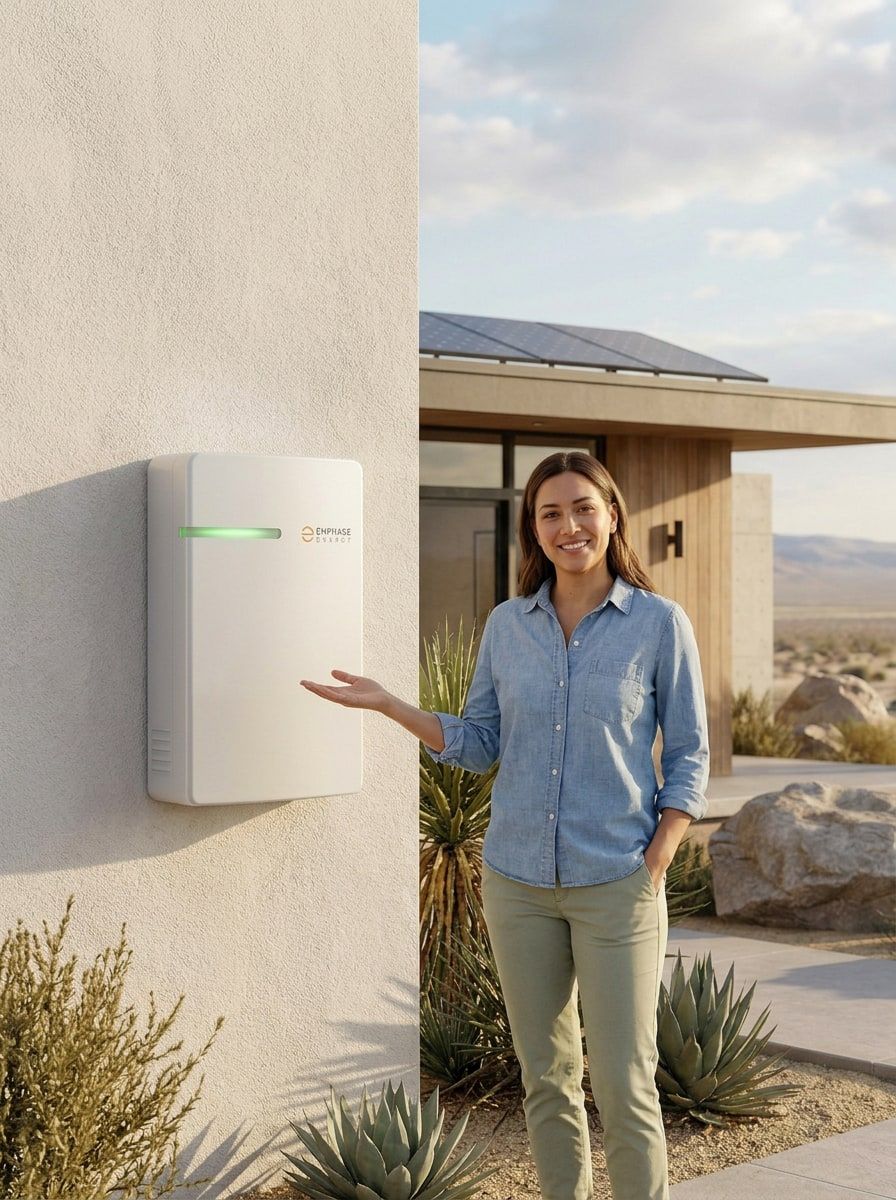
If you already have solar on your roof, a battery is often the next upgrade homeowners consider. It stores the solar your panels make so you can use it later, and it can keep part of your home running when the grid goes down. Here is what a battery-only upgrade does, how your net metering plan changes the picture, and what to check before you buy.
Why Solar Alone Goes Dark in an Outage
Many homeowners are surprised to learn that their panels stop working when the power goes out. Residential solar systems are designed to shut off automatically during outages, so even homes with solar can lose power.
A battery changes that. During an outage, a solar and battery system disconnects from the grid and works on its own, powering the essentials you choose. The panels keep charging the battery during the day, which helps backup last longer.
Using Midday Solar in the Evening
Solar panels produce the most around midday. On many California time-of-use plans, electricity costs the most from 4 to 9 p.m. A battery stores midday solar so your home can run on it through those hours instead of buying from the utility.
The order is simple. Solar first serves what your home is using. Any extra charges the battery until it is full, and anything left after that goes to the grid.
NEM 2.0 Homes and NEM 3.0 Homes
How much a battery helps your bill depends on which plan you are on.
- NEM 2.0 and older plans. These plans credit the solar you send to the grid at retail rates, including generation, distribution, and transmission charges. They are closed to new enrollments. For these homes, a battery is mainly about backup power and running on your own solar in the evening.
- Net Billing Tariff, often called NEM 3.0. Since April 15, 2023, customers applying to connect solar to the grid have been placed on the Net Billing Tariff. It credits exported solar at a rate reflecting its value to the grid. For these homes, keeping your solar for your own use matters more, and a battery is central to the savings.
If you are on NEM 2.0, the first question is usually whether adding a battery puts that agreement at risk. We cover that in Can I add a battery and keep NEM 2.0?
What to Check Before You Buy
- Your current plan. Your utility bill or online account shows whether you are on NEM 2.0 or the Net Billing Tariff.
- Who owns your solar. If your panels are leased or under a PPA, the provider owns the system. Talk to them about adding a battery before you sign anything.
- What you want backed up. A battery keeps the circuits you choose running, such as the refrigerator, lights, medical equipment, and Wi-Fi. Air conditioning and space heaters use a lot of power, and some appliances cannot be backed up because they use more power than the battery can supply.
- How long you want backup to last. That depends on battery size, how much energy you use, and whether you have solar. At night or on cloudy days, solar may not be able to recharge the battery during an outage.
- The details in writing. The proposal should state the battery’s capacity, which circuits it covers, and how it works with your existing system and utility agreement.
A Note on Incentives
The federal tax credit for solar and batteries that homeowners buy themselves ended after 2025. Leased and PPA systems can still qualify for a credit of up to 40%, claimed by the system owner, when placed in service by December 31, 2027. This is general information, not tax advice. Your tax advisor can tell you what applies to you.
How Solar Advantage Helps
We sit down with you, review your current agreement, your bills, and what you want backed up, and determine the battery solution that will give you the best savings. We work with several licensed installation partners, so we can match you with the right one, and that partner designs, permits, and installs it. Your contract is with that partner. Residential sales are made by Ernie Delgado, California Home Improvement Salesperson Reg. No. 134510SP. We meet by appointment, on your schedule.
Ready to add a battery to the solar you already have? Get a quote, and check the box that says you already have solar.
Sources
- Energy Trust of Oregon, solar and storage for home resilience (2024)
- Southern California Edison, time-of-use residential rate plans
- Southern California Edison, how solar and storage work together
- California Public Utilities Commission, net energy metering and the Net Billing Tariff
- PG&E, residential battery storage
- Internal Revenue Service, residential clean energy credit
- EnergySage, tax changes and leased solar (2025)
- Baker Tilly, domestic content bonus credit
This article is general information, not legal, tax, or financial advice. Each project is unique, and all information is subject to change based on project requirements.