
Commercial and municipal
Solar and Storage for Businesses, Manufacturers, Schools, and Cities
Lower energy costs with rooftop, ground mount, and carport solar, battery storage, and EV charging. We align the right engineering, equipment, and contractor team from vetted providers and represent you through the proposal, contract, and build.
79%
of new U.S. power capacity in 2026 is solar and storage
Source: U.S. EIA, planned 2026 capacity additionsPaid in cash
federal clean energy credits for schools, cities, and nonprofits (IRS direct pay)
Source: Inflation Reduction Act, IRC §6417 elective pay4 years
of rising U.S. power demand, the first streak since 2007
Source: U.S. EIA Short-Term Energy Outlook
Federal credit deadline
December 31, 2027
New commercial solar projects that begin construction after July 4, 2026 must be placed in service by this date to qualify for the federal credit.
Design, permitting, interconnection, and construction all take time, so plan backward from this date. Your tax advisor confirms how the rules apply to your project.
Source: One Big Beautiful Bill Act, IRC §48E (placed in service, construction begun after July 4, 2026)Project Types
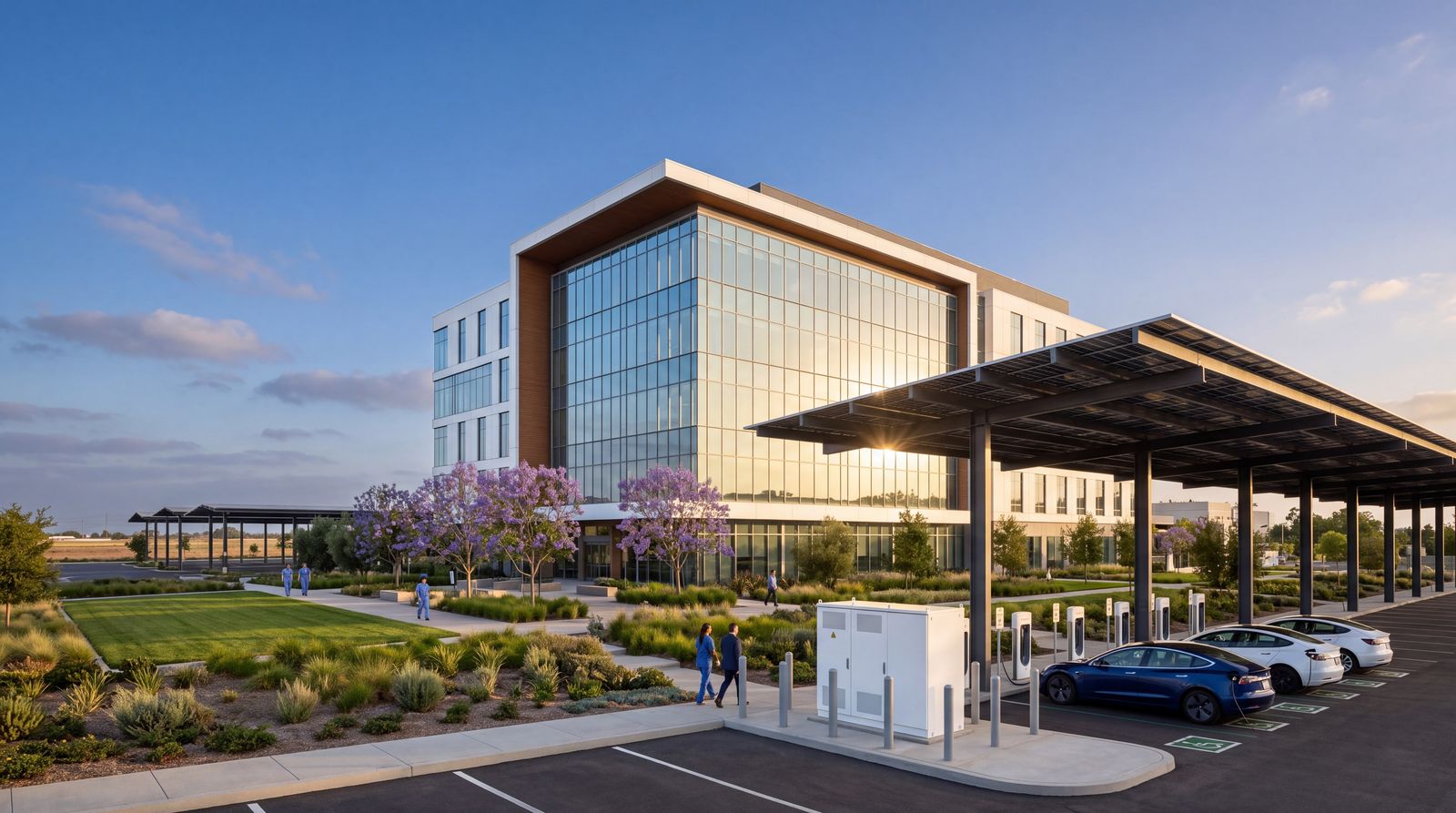
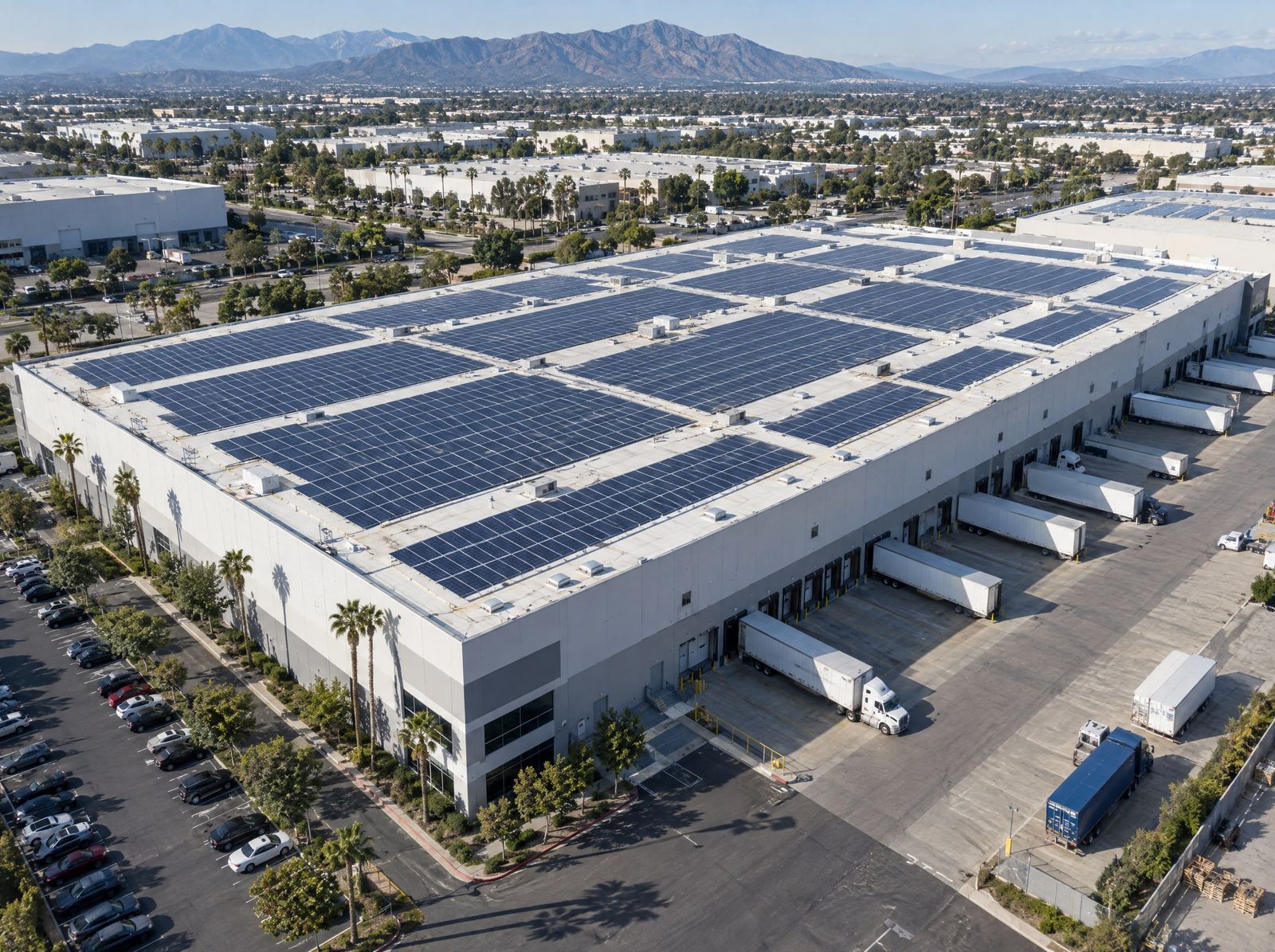
- Rooftop SolarFlat and pitched roofs on offices, warehouses, schools, and churches.
- Ground MountOpen land on campuses, farms, and municipal sites.
- Solar CarportsParking canopies that generate power and shade cars.
- Battery StorageCuts demand charges and covers evening peak rates.
- EV ChargingChargers for fleets, staff, and visitors, or public charging that earns revenue.
Three Ways to Pay, Matched to Your Organization
PPA
- You pay
- A set rate for the power the system produces.
- Ownership
- The provider owns and maintains the system.
- Best for
- No upfront cost and no maintenance.
Lease
- You pay
- A fixed monthly payment.
- Ownership
- The provider owns the system. You use all of its power.
- Best for
- Predictable payments for budgeting.
Cash or Loan
- You pay
- You pay for the system.
- Ownership
- You own it and claim the incentives.
- Best for
- The largest long-term savings.
Schools, Cities, Tribes, and Nonprofits: Elective Direct Pay
Tax-exempt and public organizations can receive the federal clean energy credit as a direct payment from the IRS, even with no tax to offset.
Source: Inflation Reduction Act, IRC §6417 elective payPaid in cash
Solar plus storage
Storage Is Where More of the Savings Comes From
In many states, utilities now credit less for solar sent to the grid at midday and charge more in the late afternoon and evening. Many commercial bills also carry demand charges for the highest use in a month.
A battery stores midday solar for those evening hours and trims demand spikes. We make sure proposals size solar and storage together around your utility’s rates and your load.
How a Project Runs
Energy Review
Your bills, rates, roof or land, and electrical service.
Options From Vetted Providers
The right engineering, equipment, storage, and ownership model for your site, compared side by side.
Contract and Financing
We represent you through terms, incentives, and financing.
Permitting and Construction
A qualified, vetted contractor team, led by our engineering and construction partner. We stay your point of contact.
Monitoring
Performance tracking comes with the system, and we are still a call away.
Frequently Asked Questions
Common questions from businesses, manufacturers, schools, cities, and nonprofits.
What does an energy review include?
We look at your electric bills and rate plan, your roof or land, and your electrical service, then align the right engineering, equipment, and storage from vetted providers and compare system designs and ownership models side by side.
What is the December 31, 2027 deadline?
New commercial solar projects that begin construction after July 4, 2026 must be placed in service by December 31, 2027 to qualify for the federal credit. Design, permitting, interconnection, and construction all take time, so plan backward from that date. Your tax advisor confirms how the rules apply to your project.
What is elective direct pay?
Schools, cities, tribes, nonprofits, and other tax-exempt or public organizations can receive the federal clean energy credit as a direct cash payment from the IRS, even with no tax to offset (Inflation Reduction Act, IRC §6417).
Should we choose a PPA, a lease, or buy the system?
With a PPA you pay a set rate for the power the system produces and the provider owns and maintains it. With a lease you make a fixed monthly payment and use all of the system’s power. Buying with cash or a loan means you own the system and claim the incentives, which usually brings the largest long-term savings.
Why add battery storage?
In many states, utilities credit less for solar sent to the grid at midday and charge more in the late afternoon and evening, and many commercial bills include demand charges for the month’s highest use. A battery stores midday solar for those hours and trims demand spikes.
Can EV charging be part of the project?
Yes. Chargers for fleets, staff, and visitors can be sized together with the solar and storage, including under solar carports. Chargers can also be open to the public and set up to charge drivers for each session, turning parking into a source of revenue.
Do you work with auto dealerships?
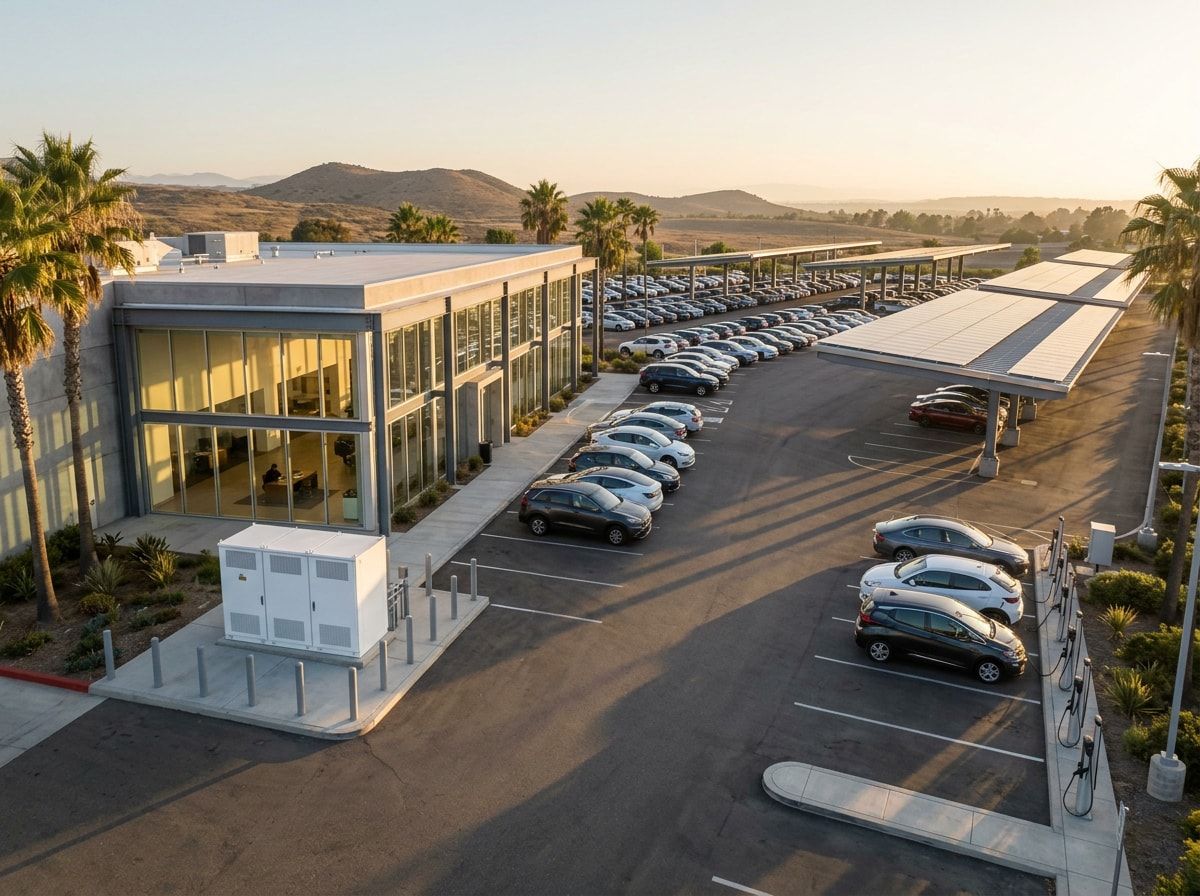
Yes. Dealerships that sell electric vehicles often need Level 2 and DC fast chargers, which can raise demand charges. We align solar carports over the lot, battery storage to manage demand peaks, and chargers, including public charging that earns revenue, from vetted providers.
Who installs the system?
A qualified, vetted contractor team handles permitting and construction, led by our engineering and construction (EPC) partner, the way a general contractor runs the trades on a building project. We represent you through the proposal, financing, and contract, and stay your point of contact through the build.
Do you work outside California?
Yes. We work with businesses, manufacturers, schools, cities, and nonprofits across the United States and abroad.
Request an Energy Review
Tell us about the site and what you pay for power today. We will tell you what fits and what it could cost.
- Phone
- 866-800-8971
- Office
- 4195 Chino Hills Parkway, Suite 512
Chino Hills, California 91709