
Residential
Solar and Battery Backup for Your Home
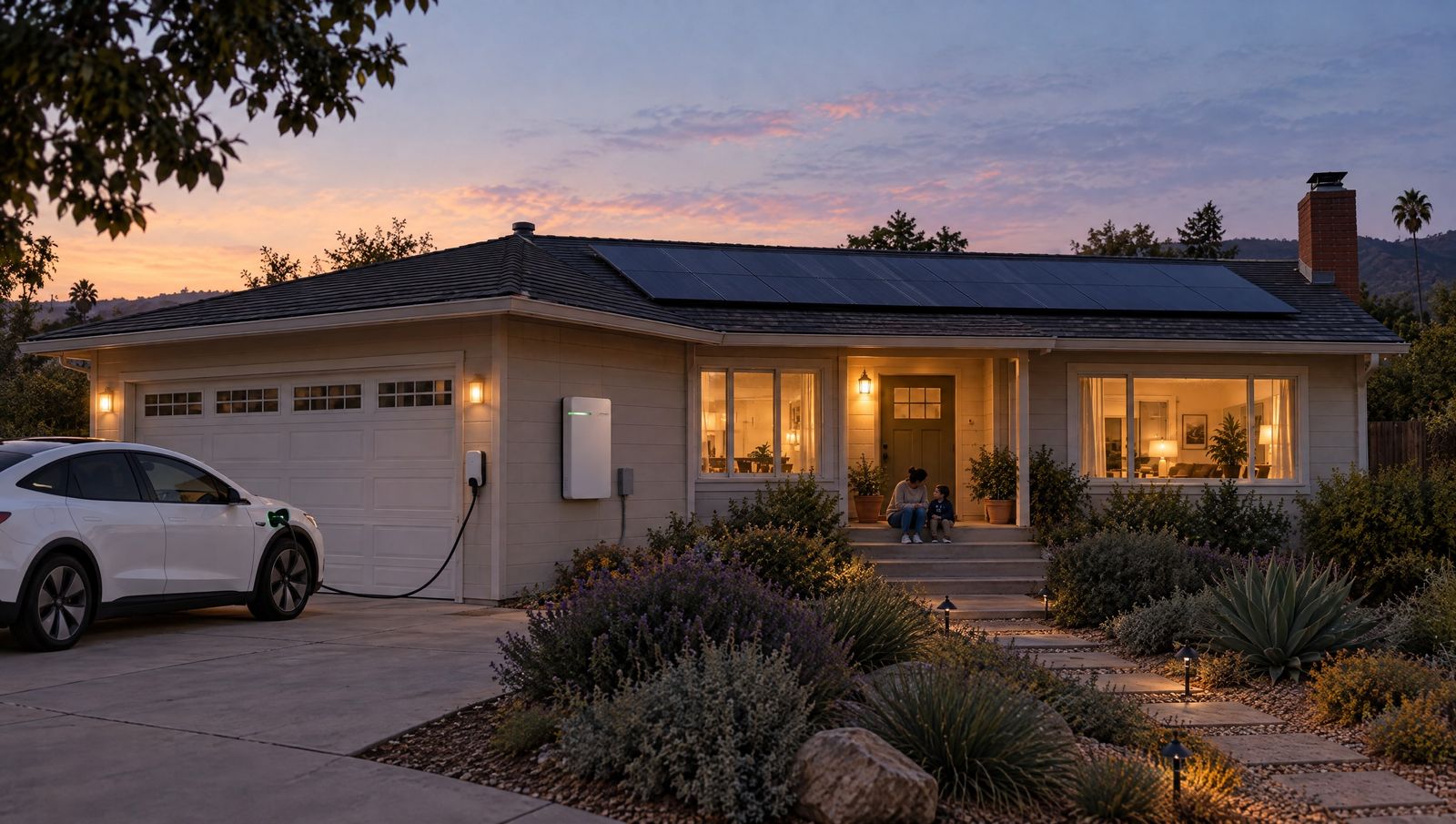
Keep the lights on in an outage and use your own solar through the evening peak. We analyze your home and your bills with you and find the solution with the best savings, then match you with the right licensed installer.
Solar and a Battery, Designed Together
In California, a battery is what makes solar pay off now.
Backup When the Power Goes Out
A battery keeps the circuits you choose running during an outage.
Your Solar, After Sunset
Store midday solar and use it from 4 to 9 p.m., when power costs the most.
Ready for an Electric Car
Your proposal can account for home charging.
For homes that already have solar
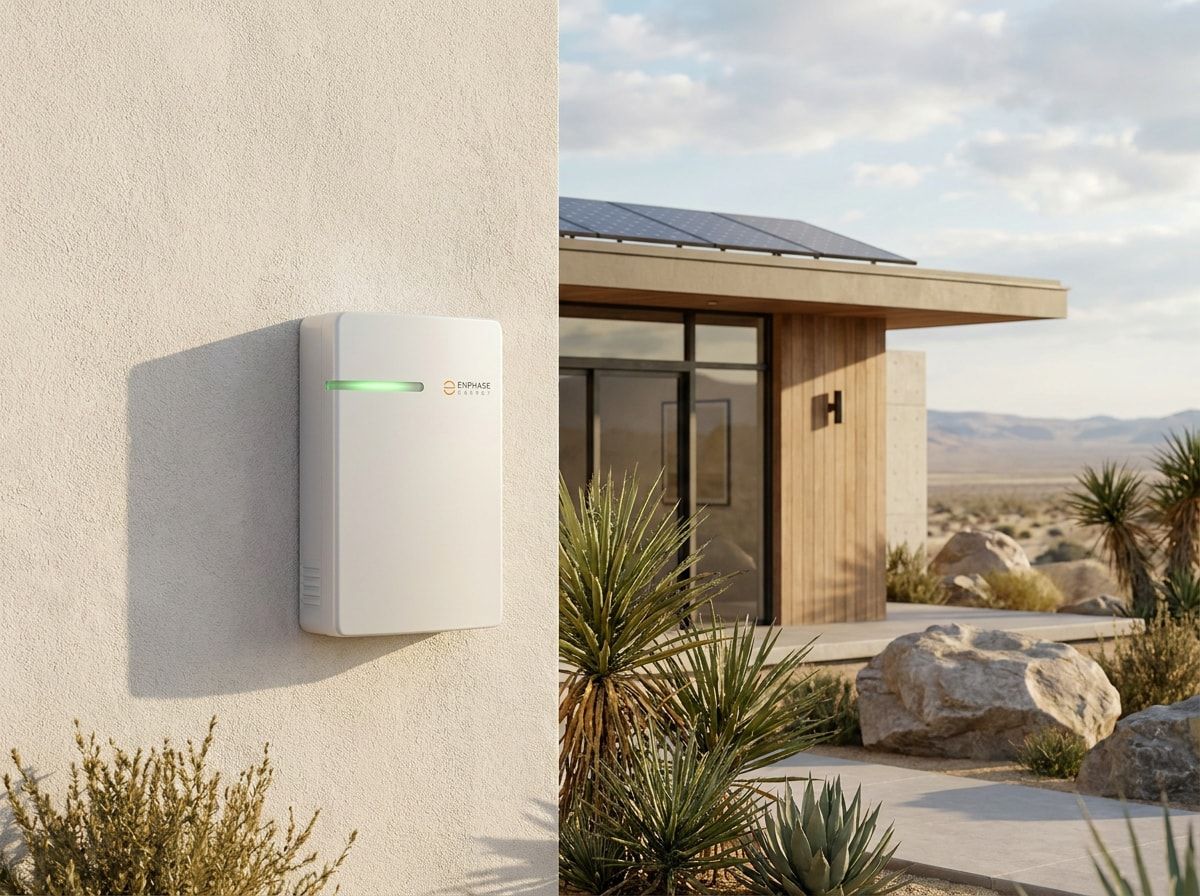
Already Have Solar? Add a Battery.
Store the solar you already make and use it in the evening, with backup power when the grid goes down.
On NEM 2.0? Adding a battery generally keeps your NEM 2.0 agreement in place, as long as the change stays within your utility’s rules for system modifications. We review your agreement before you get a proposal.
Add a battery to my systemWhy a battery matters now
The 4 to 9 p.m. Peak
Under NEM 3.0, solar you send to the grid at midday earns much less than it used to, and evening power costs the most. A battery stores your midday solar so your home runs on it through the peak instead of buying from the utility.
Ways to Pay
Lease
- You pay
- A fixed monthly payment, often with $0 down.
- Ownership
- The provider owns the system and handles maintenance.
PPA
- You pay
- A set rate for the power the system produces, often with $0 down.
- Ownership
- The provider owns the system and handles maintenance.
Cash or Loan
- You pay
- You pay for the system.
- Ownership
- You own it and are responsible for maintenance.
The federal credit for solar that homeowners buy themselves ended after 2025. Leased and PPA systems can still qualify for a credit of up to 40%, claimed by the system owner, when placed in service by December 31, 2027.
Source: IRC §48E plus domestic content bonus, claimed by the system ownerHow It Works
We analyze your home, your bills, and your goals with you and determine the solution that will give you the best savings. We work with several licensed installation partners, so we can match you with the right one, and that partner designs, permits, and installs it.
Consultation
We look at your bills, your roof, and what you want backed up.
Your Proposal
A solar and battery system sized to your home and rate plan, prepared with our installation partner.
Permits and Installation
Handled by a licensed installation partner. We stay your point of contact.
Monitoring
Track production and battery use from your phone.
Your Solar Advantage representative: Ernie Delgado, California Home Improvement Salesperson Reg. No. 134510SP. Contracts are with the licensed installation partner.
Frequently Asked Questions
Common questions from homeowners.
How does Solar Advantage work with homeowners?
We sit down with you, analyze your home, your electric bills, and your goals, and determine the solution that will give you the best savings. We work with several licensed installation partners, so we can match your home with the right one, and that partner designs, permits, and installs the system. Your contract is with that partner. We meet by appointment, on your schedule. Work with us for a higher-quality, custom experience and competitive rates. We maintain high standards in customer acquisition. Residential sales are made by Ernie Delgado, California Home Improvement Salesperson Reg. No. 134510SP.
I already have solar. Can I add a battery?
Yes. A battery stores the solar you already make for the evening and keeps the circuits you choose running when the grid goes down. If you are on NEM 2.0, adding a battery generally keeps your NEM 2.0 agreement in place as long as the change stays within your utility’s rules for system modifications. We review your agreement before you get a proposal.
Why does a battery matter under NEM 3.0?
Under California’s Net Billing Tariff, solar sent to the grid at midday earns far less than it used to, while power from 4 to 9 p.m. costs the most. A battery stores your midday solar so your home runs on it through the evening instead of buying from the utility.
What stays on during a power outage?
The circuits you choose to back up, such as the refrigerator, lights, internet, and outlets. How much you can run, and for how long, depends on the battery size, which your proposal spells out.
Is there still a federal tax credit for home solar?
The federal credit for solar that homeowners buy themselves ended after 2025. Leased and PPA systems can still qualify for a credit of up to 40%, claimed by the system owner, when placed in service by December 31, 2027. This is general information, not tax advice.
Is there a $0-down option?
Often, yes. Leases and power purchase agreements (PPAs) are frequently available with $0 down. The provider owns the system and handles maintenance, and you pay a fixed monthly amount or a set rate for the power it produces.
Can my system charge an electric car?
Yes. Your proposal can account for home EV charging so the solar and battery are sized for it.
How long does it take to go solar?
Typically about 3 to 6 months from the first conversation to a completed installation, depending on design, permits, and utility approval.
Get a Quote
Tell us about your home and your electric bill. If you already have solar, check the box and we will look at adding a battery.
- Phone
- 866-800-8971
- Office
- 4195 Chino Hills Parkway, Suite 512
Chino Hills, California 91709