
News & Insights · Utility & Data Center · Insight
Front of the Meter vs Behind the Meter: Which Is Your Project?
 By Ernie Delgado
· · 4 min read
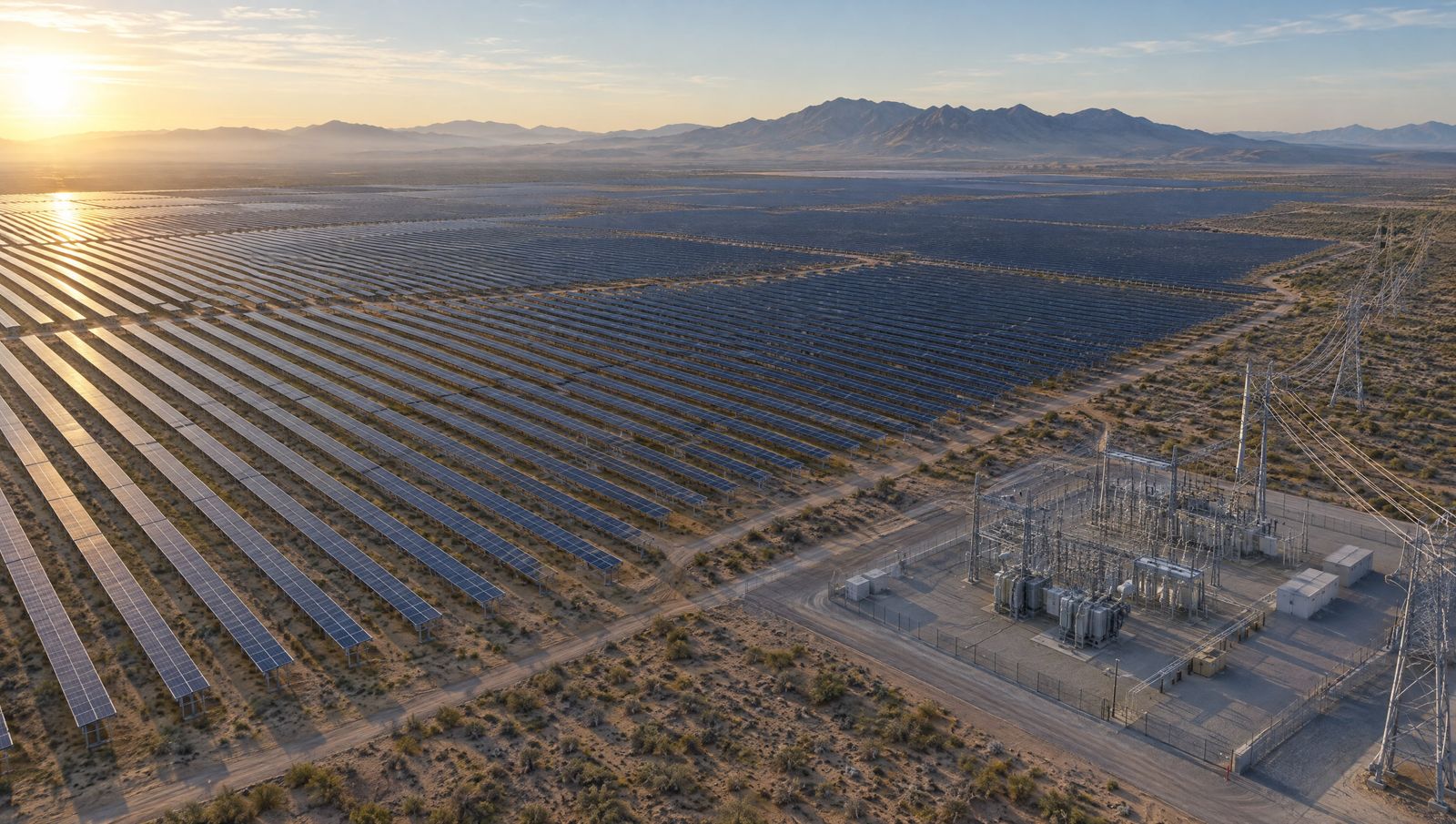
Every large energy project starts with one question that shapes everything after it: who buys the power? If the buyer is a utility or the wholesale market, the project sits in front of the meter. If the buyer is one large user on the same site or nearby, the project sits behind the meter. The two can look alike on a site plan, but they follow different rules, contracts, and timelines.
What Front of the Meter Means
Front-of-the-meter projects are generation and storage that sell power to a utility or into the wholesale market. The output is sold under a power purchase agreement (PPA) or bought through a utility’s own procurement. The National Renewable Energy Laboratory (NREL) describes utility-scale generation as interconnected to the utility transmission system.
That connection brings federal rules into play. The Federal Energy Regulatory Commission (FERC) oversees wholesale electricity prices and interstate transmission, according to the Government Accountability Office. These projects also wait in the grid operator’s interconnection queue. Berkeley Lab found that for projects built in 2025, the median time from interconnection request to commercial operation was more than five years in the regions with available data.
What Behind the Meter Means
Behind-the-meter projects serve one large user, such as a data center, manufacturing plant, or campus. NREL places behind-the-meter generation on the customer side of the meter. The equipment can sit on the site itself or nearby, connected by private wire, and it is sized to that user’s load and uptime target. These projects are often called commercial and industrial (C&I) and can run from a few megawatts to 100 MW or more.
NREL lists what behind-the-meter projects typically provide: energy cost savings, control over operations and maintenance, use of the power on site, and resilience when battery storage is included.
Behind the meter still comes with rules. A site that stays connected to the grid still works with its utility, and states, rather than FERC, have authority over retail electricity rates, local distribution, and the siting of power plants and transmission lines, according to the Government Accountability Office. NREL’s screening checklist for these projects ends with a plain step: engage your utility early.
Why the Distinction Matters
- Rules. Front-of-the-meter projects follow the utility’s interconnection process and wholesale market rules. Behind-the-meter projects follow the retail and state rules that apply to the host site. Rules for large loads connected directly to a generator are still taking shape: in December 2025, FERC found the PJM grid operator’s existing rules for co-located load unjust and unreasonable and directed it to add new transmission services for that load.
- Contracts. A front-of-the-meter project sells to a utility or a market. A behind-the-meter project sells to one customer, so that customer’s credit, contract term, and load forecast carry the deal.
- Financing. Lenders and tax equity partners look at who pays for the power and for how long. The buyer and the contract structure shape which financing fits.
- Timelines. Berkeley Lab’s queue data covers only generation seeking to connect to the transmission grid and leaves out behind-the-meter projects. A behind-the-meter project has its own approvals with the utility and the state, and planning for them early keeps them off the critical path.
Questions That Sort Out Your Project
- Who will buy the power: a utility, a wholesale market, or one large user?
- Is the load on the same site, or close enough to reach by private wire?
- How many megawatts does the load need, at what hours, and what uptime target applies?
- Will the site stay connected to the grid, and for what: backup, added supply, or exports?
- Which grid operator and which state regulator have authority over the site?
Some projects mix the two, such as a generator that sells into the market and also serves a load connected directly to it. That is where the newest rules apply, so those projects deserve the earliest look.
Where Solar Advantage Fits
Solar Advantage is an independent energy consultant. We handle capture: we find the energy need, shape the opportunity, and bring together developers, engineering and construction (EPC) firms in the United States, Canada, and India, and capital. Sorting out whether a project is front of the meter or behind the meter is one of the first things we look at. You keep one point of contact from the first energy assessment through contract signing, and we stay involved while partners build and commission the project.
If you are weighing which path fits your project, share the site location, the load in megawatts (an estimate is fine), your timeline, and what is already in place (a site, a load estimate, an offtaker or tenant, or financing), and we will tell you what we would look at first.
Sources
- National Renewable Energy Laboratory, Behind-the-Meter Projects: Overview (2020)
- U.S. Government Accountability Office, Electricity Markets: FERC’s Role in Protecting Consumers (GAO-03-726R)
- Lawrence Berkeley National Laboratory, Queued Up: 2026 Edition
- FERC order on co-located load in PJM, summarized by Jones Day (2025)
This article is general information, not legal, tax, or financial advice. Each project is unique, and all information is subject to change based on project requirements.