
News & Insights · Utility & Data Center · Insight
Green Hydrogen Explained: Where It Makes Sense Today and Where It Doesn't
 By Ernie Delgado
· · 4 min read
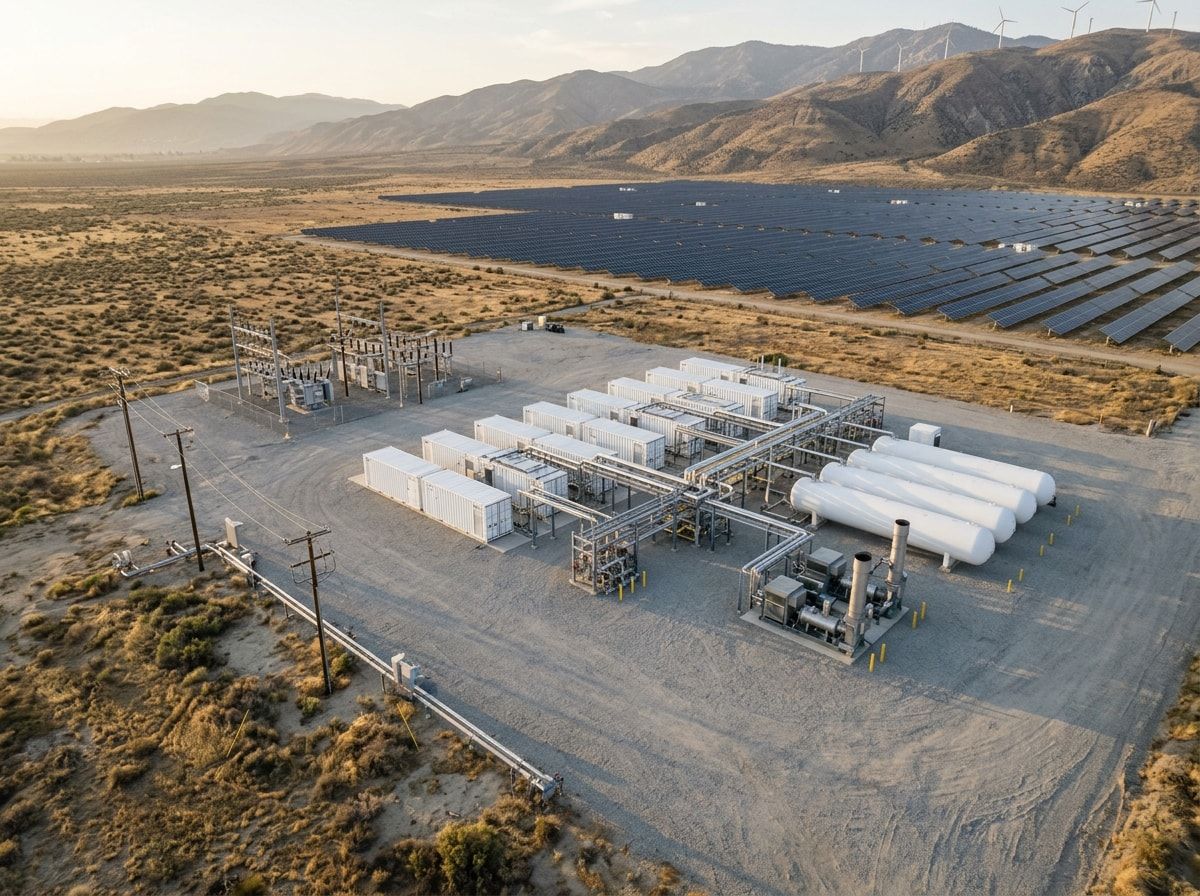
Green hydrogen is hydrogen made from water with renewable electricity. It can be stored for long periods, turned back into power, and used as a fuel or feedstock in industry. It also costs more than conventional hydrogen today and loses much of its energy along the way. Both sides matter when deciding whether it belongs in a project.
How It Is Made
The U.S. Department of Energy (DOE) describes electrolysis as using electricity to split water into hydrogen and oxygen. Electrolyzers range from small units to large central plants, and the main types are polymer electrolyte membrane (PEM), alkaline, and solid oxide.
The electricity source decides how clean the result is. DOE notes that hydrogen from electrolysis can have near-zero greenhouse gas emissions depending on the power used. DOE’s national hydrogen strategy adds that electrolysis running on the current average U.S. grid mix can produce more than double the emissions of conventional production.
Conventional hydrogen is the benchmark. The U.S. Energy Information Administration (EIA) reports that steam-methane reforming, a fossil fuel process, is used for nearly all commercially produced hydrogen in the United States. DOE’s strategy puts U.S. production at about 10 million metric tons a year, mostly for petroleum refining, ammonia, and the chemical industry.
Where It Makes Sense
- Industrial feedstock. Refineries, ammonia plants, and chemical makers already use hydrogen. DOE’s strategy says clean hydrogen can displace conventional hydrogen in petroleum refining in the near term, and it names the industrial sector, including chemicals, steel, and refining, as a priority market.
- High-temperature heat. DOE’s strategy notes that about 30% of the heat used in industry is above 300°C and would likely require clean fuels, with furnaces that burn hydrogen or hydrogen blends as key options.
- Long-duration storage and firm power. A DOE storage handbook chapter from Sandia National Laboratories finds hydrogen cheaper than batteries for storage needs above about 12 hours, because storing more energy mainly means larger tanks or reservoirs, which is inexpensive. DOE’s strategy names fuel cells and low-NOx turbines as a leading option for multi-day storage and dispatchable power.
Where It Does Not, Yet
- Short-duration storage. The same Sandia chapter puts round-trip efficiency for electrolysis and fuel cell systems at around 40%, meaning about 40% of the electricity used to make the hydrogen comes back as electricity. Lithium-ion batteries return 70 to 90%. For daily shifting of solar into the evening, batteries are the better fit, and Sandia notes hydrogen is generally not practical for small quantities of storage.
- Cost. DOE’s strategy cites a 2020 analysis putting clean hydrogen from PEM electrolysis with renewable power at over $5 per kilogram, and notes that the cost depends heavily on the price of electricity. DOE’s goal is $1 per kilogram by 2030, and it says production costs must fall significantly to compete with conventional hydrogen.
- Storage and transport. Gaseous hydrogen has very low energy density by volume, which DOE notes makes it hard to store in compact containers. DOE also lists transport challenges, including pipelines, tube trailers, liquefaction, siting, and permitting.
The pattern is consistent: green hydrogen earns its place where long storage, high heat, or an existing hydrogen demand is the problem, and where low-cost renewable power is available to make it.
The Federal 45V Credit
The clean hydrogen production credit under Section 45V pays per kilogram of qualified clean hydrogen, and the IRS notes the amount depends on the emissions intensity of the production process and on prevailing wage and apprenticeship requirements. A 2025 law (Public Law 119-21) moved the deadline forward: a facility must now begin construction before January 1, 2028, instead of 2033. Credits run for 10 years from when the facility is placed in service. Your tax advisor confirms how the rules apply to your project.
Where Solar Advantage Fits
Solar Advantage is an independent energy consultant. We handle capture: we find the energy need, shape the opportunity, and bring together developers, engineering and construction (EPC) firms in the United States, Canada, and India, and capital. When green hydrogen is on the table, we start with the use: storage, firm power, feedstock, or heat. You keep one point of contact from the first energy assessment through contract signing, and we stay involved while partners build and commission the project.
If you are weighing green hydrogen for a site, share the site location, the load in megawatts (an estimate is fine), your timeline, and what is already in place (a site, a load estimate, an offtaker or tenant, or financing), and we will tell you what we would look at first.
Sources
- U.S. Department of Energy, Hydrogen Production: Electrolysis
- U.S. Department of Energy, U.S. National Clean Hydrogen Strategy and Roadmap (2023)
- U.S. Energy Information Administration, production of hydrogen
- Sandia National Laboratories, DOE Energy Storage Handbook, Chapter 11: Hydrogen Energy Storage
- Internal Revenue Service, Clean Hydrogen Production Credit
- 26 U.S.C. § 45V as amended by Public Law 119-21, via Cornell Legal Information Institute
This article is general information, not legal, tax, or financial advice. Each project is unique, and all information is subject to change based on project requirements.