
News & Insights · Utility & Data Center · Insight
How Data Centers Can Get Power Sooner When the Grid Wait Is Five Years
 By Ernie Delgado
· · 3 min read
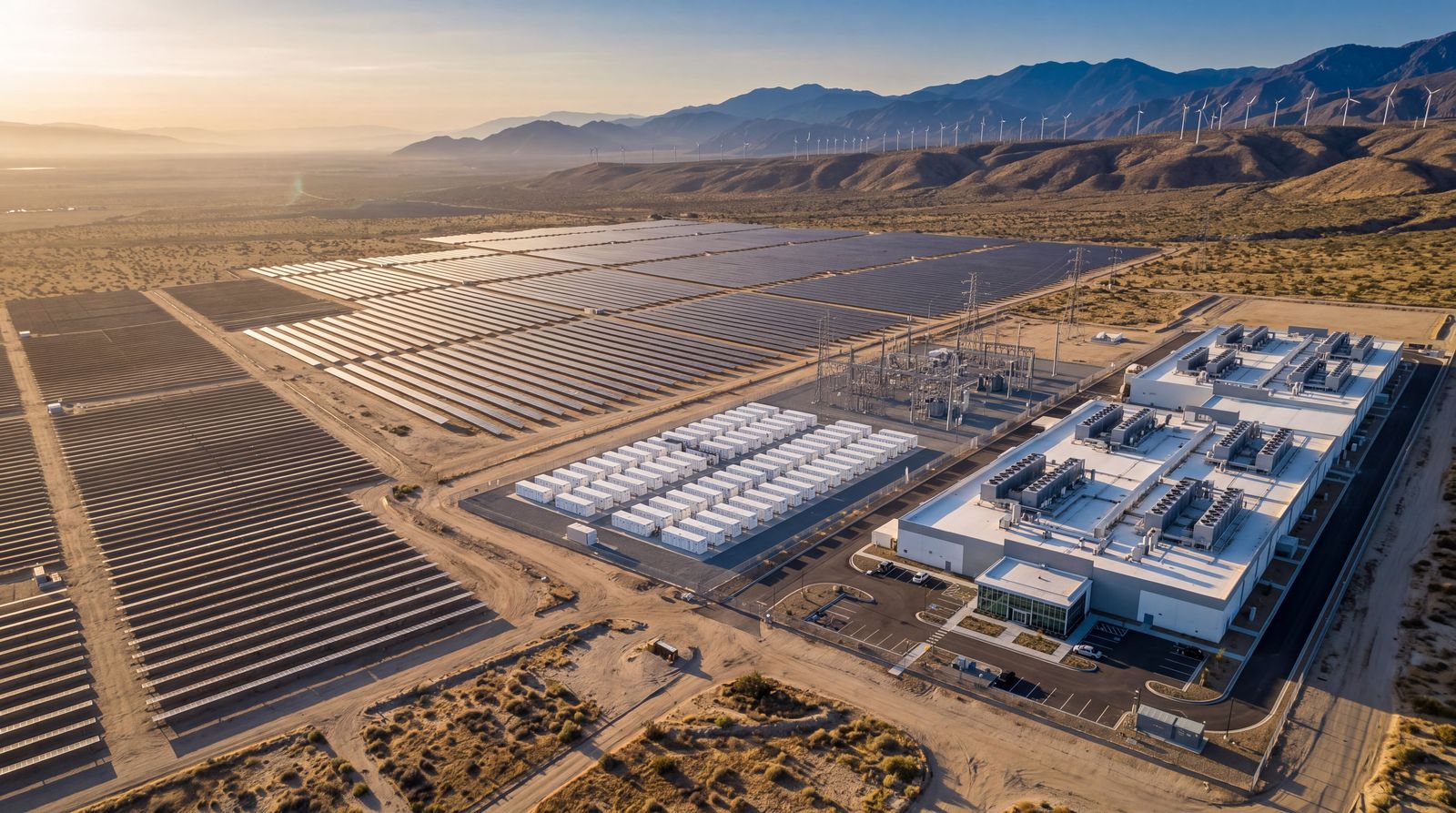
Data centers are now the fastest-growing source of new electricity demand in the United States. The U.S. Department of Energy and Lawrence Berkeley National Laboratory expect data center power demand to grow two to three times by 2028, when data centers could use as much as 12% of the nation’s electricity.
The grid is not keeping pace. Berkeley Lab’s latest interconnection study finds that the median wait to connect a new project to the grid is now more than five years, and only about 13% of connection requests ever get built.
For a campus with a fixed opening date, that gap is the whole problem. The good news is that a grid connection does not have to be the only path to power.
Start With the Load
The most common planning mistake is to pick a site and a technology first, then discover the power does not fit. Start with five questions instead:
- How many megawatts, at what hours? A training cluster and a colocation hall have very different load shapes.
- How fast will the load grow? Phased growth opens the door to phased power.
- What is the uptime target? This decides how much firm power the plan needs.
- What grid capacity exists today? Some sites have headroom on an existing substation; most do not.
- What does power cost there now, and where is it heading?
The answers shape everything that follows: what to build, how big, and how it connects.
Four Ways to Close the Gap
1. On-Site Generation and Storage
Solar and batteries at the facility reduce how much power the campus draws from the grid and can carry critical loads. On their own they rarely cover a large campus, but they shrink the size of the grid connection the site needs and add resilience.
2. Near-Site Generation, Connected by Private Wire
Larger solar, wind, and storage projects close to the campus can be sized well beyond what fits on the property, connected by private wire or through the local grid. This is often where most of the energy comes from.
3. Firm Power for Around-The-Clock Uptime
Solar and wind follow the weather. Data centers do not. A plan that has to meet a strict uptime target pairs variable generation and battery storage with firm sources that run at any hour:
- Geothermal, where the resource exists, for steady baseload output.
- Hydro, including new generation at existing dams.
- Thermal (fuel-based) generation that can be dispatched whenever it is needed, matched to the fuel available at the site.
4. The Grid as Part of the Plan, Not the Whole Plan
Start the interconnection process early, even while the other pieces come together. A site that combines on-site and near-site resources with firm power can open in phases and grow into its full grid connection instead of waiting years for it.
Financing a Large-Load Power Plan
Projects at this scale are financed with investment firms, lenders, and tax equity partners. Common structures include power purchase agreements, tax credit transfers, and IRS elective direct pay for public and tribal owners. The right mix depends on who owns the generation and who buys the power.
Where Solar Advantage Fits
Solar Advantage handles capture: we identify the energy need, shape the opportunity, and bring together the developers, engineering and construction firms in the United States, Canada, and India, and the capital that build it. You keep one point of contact from the first energy assessment through contract signing.
If you are planning a campus, or already waiting in an interconnection queue, the best time to look at the full power picture is now. Share the site location, the load in megawatts (an estimate is fine), your timeline, and what is already in place (a site, a load estimate, an offtaker or tenant, or financing), and we will tell you what we would look at first.
Sources
- U.S. Department of Energy, report evaluating the increase in electricity demand from data centers (2024)
- Lawrence Berkeley National Laboratory, 2024 United States Data Center Energy Usage Report
- Lawrence Berkeley National Laboratory, Queued Up: 2026 Edition
This article is general information, not legal, tax, or financial advice. Each project is unique, and all information is subject to change based on project requirements.