
News & Insights · Commercial & Municipal · Insight
The Q2 2027 Checkpoint: Why Commercial Projects Need Applications in Soon to Meet the Dec. 31, 2027 Deadline
 By Ernie Delgado
· · 4 min read
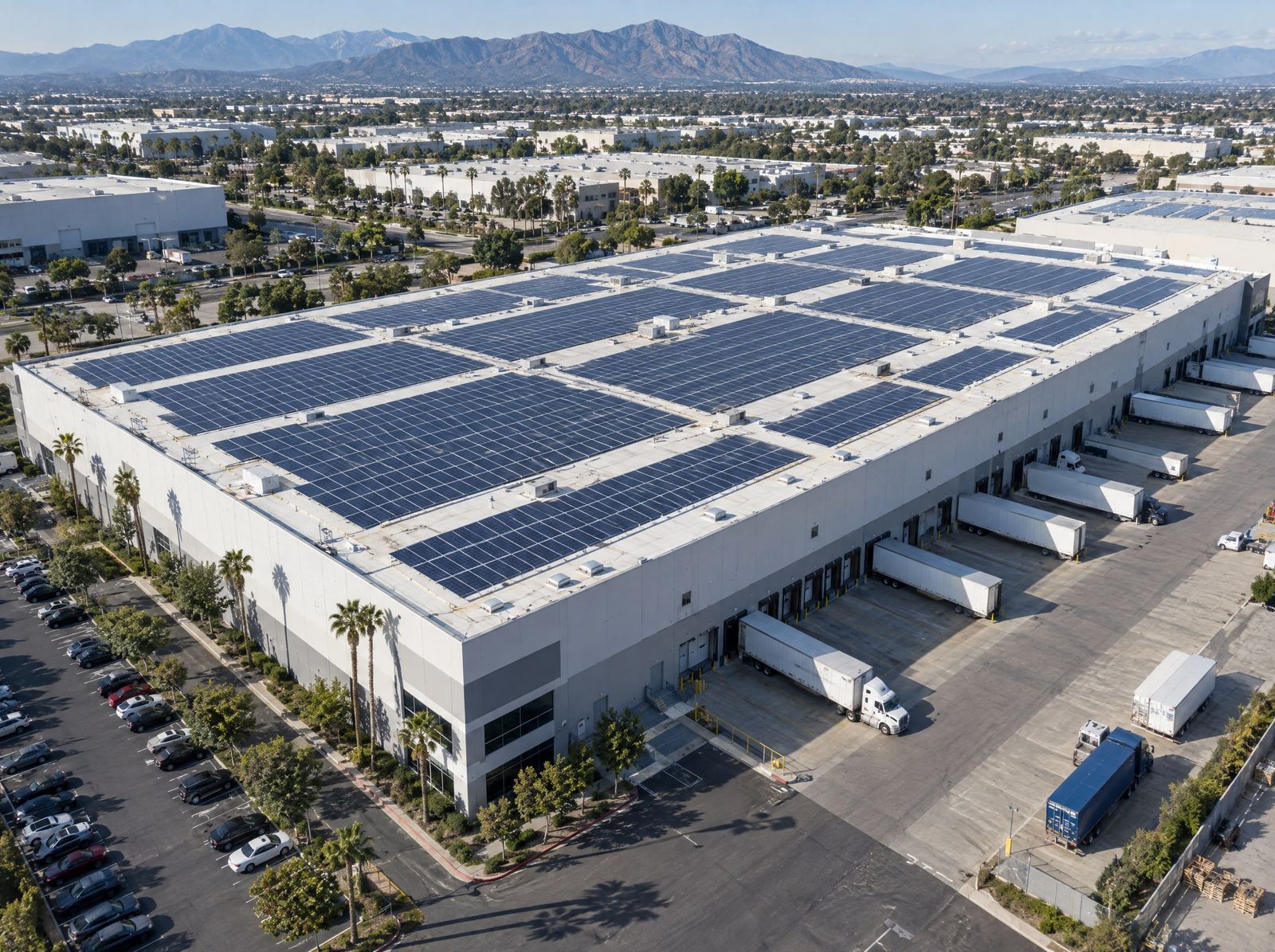
New commercial solar projects that begin construction after July 4, 2026 must be placed in service by December 31, 2027 to qualify for the federal clean electricity credit. We covered what that means in our guide to the December 31, 2027 deadline. This article is about the calendar: what has to happen, in what order, and when.
A Checkpoint, Not a Legal Deadline
Experienced engineering partners use a planning rule of thumb: have the utility interconnection application submitted by the end of the second quarter of 2027, which is June 30, 2027. The law does not set that date. The only date in the law is the placed-in-service deadline. The Q2 checkpoint is a way to leave room for the steps that come after the application, several of which depend on someone else’s schedule.
Treat it as the outer limit, and only for a utility that moves quickly. For most projects, the time to apply is late 2026 or early 2027, for the reasons below.
Why Interconnection Sets the Pace
Interconnection is the utility’s process for reviewing and approving a new system on its grid. It ends with permission to operate, the utility’s approval to connect the project to the grid.
In September 2026, Lawrence Berkeley National Laboratory published the first nationwide collection of interconnection data for distributed energy projects, covering more than 2.7 million applications submitted from 2000 to 2025. It measured the months from application to permission to operate, a span that includes construction and inspection. Among its findings:
- Mid-size projects from 50 kW to 1 MW took a median of 18 months in Massachusetts, 16 months in New York, and 17 months in Rhode Island between 2020 and 2024. The median in Arizona was 9 months.
- Solar projects from 1 to 5 MW had a median of 45 months from 2020 to 2025.
- From 2020 to 2025, 76% of projects larger than 100 kW were still in the interconnection process without permission to operate.
These are medians from a handful of states, and your utility may be faster or slower. The point is the order of magnitude. Even the fastest median above, 9 months, would carry an application filed on June 30, 2027 past December 31, 2027. A project that applies at the checkpoint is counting on a utility well ahead of these medians. An application in late 2026 or early 2027 gives the schedule room to work.
Equipment Can Be a Long Pole Too
If your site needs an electrical service upgrade, the equipment can set the schedule. A 2024 NREL report found utilities were experiencing lead times for distribution transformers of up to 2 years, about four times longer than before 2022. An early review of your electrical service shows whether this applies to you.
What Has to Happen Before the Application
An interconnection application needs a defined project. Working backward, these steps come first:
- An energy review of your bills, rates, roof or land, and electrical service.
- Options compared side by side, including system size, storage, and ownership model.
- A financing decision. PPA, lease, or cash or loan. Schools, cities, and other tax-exempt and governmental organizations can use elective direct pay, which the IRS treats as a tax payment and refunds to the organization.
- Board or council approval, scheduled around fixed meeting dates.
- Engineering detailed enough for the utility application.
After the application come permits from your city or county, the utility’s approval, equipment delivery, construction, inspection, and permission to operate. All of it has to land before December 31, 2027.
A Note on the Tax Rules
Projects that began construction on or before July 4, 2026 follow different timing rules, and the rules for showing when construction began have changed for solar. Your tax advisor confirms how the rules apply to your project.
How Solar Advantage Helps
Solar Advantage is an energy consultant. We review your bills, rates, roof or land, and electrical service; align the right engineering, equipment, and contractor team from vetted providers; compare the options side by side; and represent you through the proposal, financing, and contract. A qualified, vetted contractor team, led by an engineering and construction partner, handles permitting and construction, and we stay your point of contact through the build.
The calendar is fixed, and every month before the checkpoint counts. Tell us about the site and what you pay for power today. Request an energy review, and you will know what it takes to get your application in on time.
Sources
- The Tax Adviser, navigating safe harbor rules for solar and wind Section 48E facilities (2026)
- Lawrence Berkeley National Laboratory, Interconnection Timelines and Costs for Distributed Energy Projects in the United States (2000 to 2025) (September 2026)
- McKenna, Abraham, and Wang, National Renewable Energy Laboratory, Major Drivers of Long-Term Distribution Transformer Demand (2024)
- Internal Revenue Service, elective pay and transferability
This article is general information, not legal, tax, or financial advice. Each project is unique, and all information is subject to change based on project requirements.